
If you’re a realtor in Canada, you’ve likely heard of Personal Real Estate Corporations (PRECs). In fact, I have worked with many realtors to create and manage their PRECs. Understanding the PREC benefits for realtors is key to unlocking tax savings, reducing stress, and creating a long-term wealth strategy. While there are additional responsibilities with incorporation, the financial and planning opportunities for realtors are significant, and realtors can achieve these benefits at income levels lower than many first think.
Why consider a PREC?
The most obvious advantage of a PREC is the difference in tax rates. Corporate income tax rates are significantly lower than personal rates — with initial savings or deferrals up to approximately 40%, depending on the province or territory. For example:
A realtor earns $100,000
and
Has $20,000 of excess income
incorporation could create more than $8,000 in savings opportunities
As your business and investments grow, these savings multiply.
Key PREC benefits for realtors
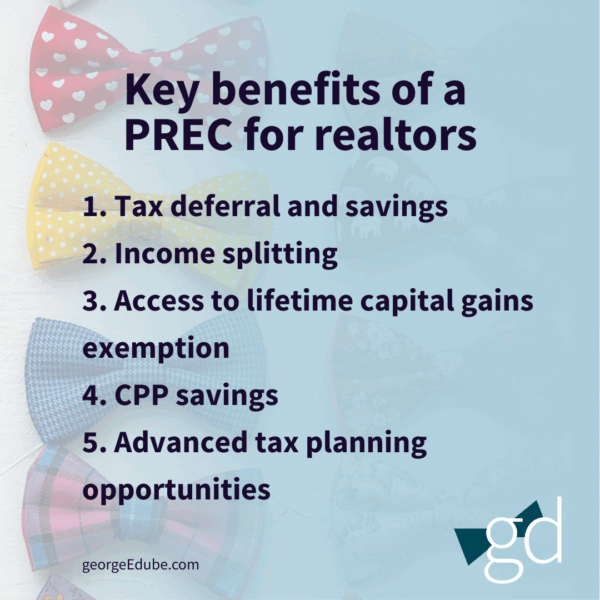
Here’s where PRECs shine for realtors:
- Tax deferral and savings – pay lower corporate tax rates and reinvest profits at a much higher after-tax rate compared to personal income.
- Income splitting – with the right structure, family members can be compensated tax-effectively.
- Sale of the business – access the Lifetime Capital Gains Exemption, potentially allowing up to $1.25 million tax-free per shareholder, and scheduled to increase.
- CPP savings – avoid some Canada Pension Plan contributions (though this reduces future CPP benefits).
- Advanced tax planning – options like family trusts, holding companies, and tailored remuneration strategies.
Common PREC pitfalls to avoid
While the tax advantages are clear, incorporation isn’t as simple as filing online paperwork. Realtors often run into issues with:
- Bookkeeping errors – inexperienced administrators or poor systems
- Missed tax deadlines – leading to penalties and interest
- GST/HST compliance – reporting mistakes are costly
- Remuneration planning – paying yourself and family members effectively
- Cash flow management – ensuring you can cover taxes and instalments
By planning ahead and working with professionals, you can avoid these pitfalls and focus on what you do best — selling real estate.
Annual planning is essential
To get the most from a PREC, annual planning is critical. Consider:
- Remuneration – should you take a salary, dividend, or bonus?
- Savings and reinvestment – how will you use the after-tax dollars you’ve kept in the corporation?
- Income splitting – what’s the right balance for your family?
- Long-term planning – where do you want to be in 5, 10, or 20 years, and how will your PREC help you get there?
Can you set up your own PREC?
Technically yes, but the risks are high. A PREC requires carefully prepared legal agreements, tax elections, shareholder planning, and sometimes valuations. Mistakes can cost far more than the fees saved by trying to do it yourself. Just as most homeowners wouldn’t buy or sell real estate without a licensed realtor, setting up a PREC without expert tax and legal guidance is rarely a smart move.
Next steps
If you’re curious about whether a PREC makes sense for you, the next step is to review your current income, family situation, and long-term goals. An experienced advisor can help you design the right structure, set up bookkeeping, and plan for profits.
Resources
For additional resources , see:
- Claiming CCA on rental property: Should you claim depreciation?
- How I save taxes: A real-life look at my personal strategies
More questions?
Still have questions on the PREC benefits for realtors? I want to help you Do wonderful things®, so please contact me today.
Remember – circumstances are unique! This information is summary in nature. Seek out advice from your tax advisor about your specific situation.